Showing posts with label The Verge - Science Posts. Show all posts

Tuesday, December 13, 2022

Nuclear fusion power research passes milestone with ‘fusion ignition’

by Unknown  |  in The Verge - Science Posts at  8:13 AM
A sign at a gate entrance to the Lawrence Livermore National Laboratory
The west gate entrance to the US Department of Energy’s Lawrence Livermore National Laboratory in Livermore, California, US, on Monday, December 12th, 2022. | Photo by David Paul Morris / Bloomberg via Getty Images

For the first time, researchers have created a fusion reaction that resulted in a net energy gain. The results, from the Lawrence Livermore National Laboratory in California, mark a significant step on the very long road toward generating clean energy from nuclear fusion.

“Last week, lo and behold, indeed, they shot a bunch of lasers at a pellet of fuel and more energy was released from that fusion ignition than the energy of the lasers going in,” White House Office of Science and Technology Policy Director Arati Prabhakar said at a press conference announcing the achievement in Washington, DC, today. “I just think this is such a tremendous example of what perseverance really can achieve.”

Continue reading…


More details : https://ift.tt/uaW2MxY

Monday, December 12, 2022

A ‘scientific breakthrough’ in nuclear fusion? How to watch the announcement tomorrow

by Unknown  |  in The Verge - Science Posts at  10:14 AM
View of Inactivated Nova Laser, metal mechanical equipment.
The high-powered Nova Laser before it creates nuclear fusion inside its target chamber at the Lawrence Livermore National Laboratory in 1986. | Photo by Roger Ressmeyer/Corbis/VCG via Getty Images

A “scientific breakthrough” in the development of fusion energy is expected tomorrow from the Biden administration. For more than half a century, people have poured billions of dollars into nuclear fusion research, hoping to create a source of abundant, clean energy.

The rough idea is this: if we develop technology that can replicate the way the sun generates energy in a controlled way, we could power the world with energy that’s free of greenhouse gas emissions and long-lived radioactive waste. But scientists have been unable to trigger a fusion reaction that results in a net energy gain. Turns out, it takes a lot of heat energy to force atomic nuclei to “fuse” together.

Continue reading…


More details : https://ift.tt/l5JDUY6

Sunday, December 11, 2022

NASA successfully completes its Artemis I mission

by Unknown  |  in The Verge - Science Posts at  10:13 AM
An image showing NASA’s Orion capsule splashing down into the Pacific Ocean
NASA’s Orion capsule splashed down into the Pacific Ocean at around 12:40PM ET. | Screenshot: Emma Roth / The Verge

NASA’s Orion spacecraft has returned to Earth. The uncrewed capsule safely splashed down into the Pacific Ocean off of Mexico’s Baja California around 12:40PM ET on Sunday, marking the end of the landmark Artemis I mission.

After a 1.4 million-mile journey through space, the capsule splashed down in an upright position without any major hiccups. It reached speeds of about 24,500mph as it returned to Earth, while its heat shield sustained scorching temperatures of around 5,000 degrees Fahrenheit.

As it reentered Earth’s atmosphere, the Orion capsule successfully performed a skip entry maneuver, in which Orion dipped into Earth’s upper atmosphere and lifted out before reentering again. The move is supposed to help the spacecraft land in...

Continue reading…


More details : https://ift.tt/Lo6BlKb

Saturday, December 10, 2022

How to watch the end of NASA’s Artemis I mission

by Unknown  |  in The Verge - Science Posts at  6:11 AM
A row of people stand silhouetted against the orange glow of a distant rocket launch.
NASA’s SLS rocket sends the Orion Capsule on its way to the Moon on November 16th, 2022. The capsule is set to return to Earth on December 11th. | Photo by Joe Burbank / Orlando Sentinel / Tribune News Service via Getty Images

This weekend NASA’s Orion spacecraft will return to Earth, following its 25-day mission around the Moon. The uncrewed spacecraft is scheduled to splash down in the Pacific Ocean on Sunday, December 11th.

Since its launch on November 16th, Orion has traveled through Earth’s atmosphere and out into space, making a close flyby of the Moon and heading into a distant orbit, reaching a distance of over 43,000 miles from the Moon at its furthest point. Orion traveled around the Moon and made a second close flyby on the return journey and is now on its way back to Earth.

The biggest challenge that awaits the spacecraft now is safely entering the Earth’s atmosphere and landing in the ocean.

“At present, we are on track to have a fully successful...

Continue reading…


More details : https://ift.tt/1oiAq6p

Friday, December 9, 2022

Eight artists will journey around the Moon on a future SpaceX flight

by Unknown  |  in The Verge - Science Posts at  11:18 AM
A photo illustration of the dearMoon crew and two alternates. There are six people on the top and five on the bottom. The Moon is in the background, and the words ‘dearMoon CREW’ are written across the image in white.
Maezawa with the dearMoon crew and two alternates. | Image: Yusaku Maezawa

On Thursday, Japanese billionaire Yusaku Maezawa announced the selection of an eight-person crew who will join him on a SpaceX mission around the Moon. Maezawa’s dearMoon mission aims to be the first private mission around the Moon, carrying artists and creatives on a SpaceX Starship.

The crew consists of eight artists from a range of disciplines — it includes an EDM DJ, two photographers, a documentary filmmaker, and a YouTuber, along with other creative professionals.

“I hope each and every one will recognize the responsibility that comes with leaving the Earth, traveling to the moon and back,” Maezawa said in a video about the announcement, which is translated from Japanese. “They will gain a lot from this experience, and I hope they...

Continue reading…


More details : https://ift.tt/p6B1ySC

JetBlue no longer plans to offset emissions from domestic flights

by Unknown  |  in The Verge - Science Posts at  10:15 AM
A plane flies low with a city skyline in the background
A JetBlue plane takes off at San Francisco International Airport (SFO) in San Francisco, California, United States, on September 15th, 2022. | Photo by Tayfun Coskun / Anadolu Agency via Getty Images

JetBlue is giving up carbon offsets for its domestic flights, shifting its focus instead to sustainable aviation fuels. It’s a step that could help the airline actually reduce its emissions rather than relying primarily on controversial carbon offsets to counteract its fossil fuel use.

Back in 2020, JetBlue became the first US airline to voluntarily offset greenhouse gas emissions from all of its domestic flights. That effort ends in 2023, the company announced this week.

The airline now plans to effectively cut its per-seat emissions in half by 2035. For flights to take off without generating as much pollution, JetBlue says its planes will need to run on sustainable aviation fuels [SAF].

“JetBlue views SAF as the most promising avenue...

Continue reading…


More details : https://ift.tt/N1b3kS5

Thursday, December 8, 2022

The hornet formerly known as ‘murder’ hasn’t been spotted in Washington state this year

by Unknown  |  in The Verge - Science Posts at  10:24 AM
Dead giant hornets lined up in two rows next to a notebook
Dead northern giant hornets, queens, lined up on top and smaller workers below — all samples brought in for research — are displayed with a field notebook on May 7th, 2020, in Blaine, Washington. | Photo by ELAINE THOMPSON/POOL/AFP via Getty Images

Good news! The invasive insect formerly known as the “murder hornet” might soon be under control in Washington state. After wrapping up its pest trapping season for 2022, the Washington State Department of Agriculture (WSDA) reported no sightings of the northern giant hornet.

“When it comes to the pests that we survey for, the best news is no news,” Sven Spichiger, WSDA managing entomologist, said in a press release yesterday.

It is still too early to declare complete victory over the hornet. It takes three years of no sightings for the pest to be considered “eradicated” under federal guidelines. But this is the first year without sightings since the first report of a northern giant hornet in Washington set off alarm bells in 2019.

Continue reading…


More details : https://ift.tt/xznBD7q

The $949 price for Dyson’s air-purifying headphones is more absurd than the device itself

by Unknown  |  in The Verge - Science Posts at  8:17 AM
A person against a blank gray background. They are wearing the Dyson Zone with the air-purifying visor concealing their mouth.
The Dyson Zone will initially release in China in January 2023 before being made available for US preorders in March. | Image: Dyson

Dyson has released additional details for its Dyson Zone air-purifying headphones, the company’s first audio product we got to test earlier this year. On a new webpage dedicated to the unreleased headphones, Dyson has officially provided the full specifications, alongside a March release date for the US market and an eye-watering price of $949.

So, what are you getting for your money? The Dyson Zone supports Bluetooth 5.0 and features a 3.5mm audio jack and USB-C port for charging. Dyson claims the headphones can achieve up to 50 hours of battery life for audio-only operation, which is reduced to a maximum of four hours for combined air purification and audio. Dyson does not specify if these runtimes are with ANC enabled. The headphones...

Continue reading…


More details : https://ift.tt/NsfXUpx

Wednesday, December 7, 2022

Former Theranos executive Sunny Balwani is sentenced to almost 13 years in prison

by Unknown  |  in The Verge - Science Posts at  4:23 PM
Former Theranos president Ramesh Balwani
Photo: Getty Images

Ramesh Balwani has been sentenced to 155 months, or just under 13 years, in prison, according to The New York Times. Like his former business partner, Theranos founder Elizabeth Holmes, he’s due another three years of supervised release after he gets out. Balwani will have to surrender to custody on March 15th.

In July, Balwani, also known as Sunny, was convicted on 10 counts of wire fraud and two counts of conspiracy to commit wire fraud for his actions while he was president and COO of Theranos. Unlike Holmes, who was found guilty of only defrauding investors, Balwani was found guilty of deceiving both investors and patients.

Part of Balwani’s role at Theranos was overseeing the labs at the blood testing company. Theranos once claimed...

Continue reading…


More details : https://www.theverge.com/2022/12/7/23499126/sunny-balwani-sentenced-13-years-prison

Stop burning trees for energy, scientists urge ahead of UN Biodiversity Conference

by Unknown  |  in The Verge - Science Posts at  10:16 AM
AHOSKIE, NC - May 26: Little remains but stumps and puddles in
Little remains but stumps and puddles in what was once a bottomland hardwood forest on the banks of the Roanoke River in northeastern North Carolina. The trees were turned into wood pellets for burning in power plants in Europe. | Photo by Joby Warrick / The Washington Post via Getty Images

Forests are more valuable alive than dead, at least according to the more than 670 scientists who signed a letter urging world leaders to quit burning trees for energy. The plea comes as delegates gather for the United Nations Biodiversity Conference that begins today in Montreal.

The scientists want to stop to the industrial burning of wood for electricity and heat, referred to as forest bioenergy. The practice needs to be replaced by wind and solar energy, they write, to protect forests and creatures that make a home there.

“The goal to halt and reverse the global loss of nature could fail due to the growing pressure on forests from this industry,” the letter says. It’s addressed to the heads of government of China, the US, Canada,...

Continue reading…


More details : https://ift.tt/RJZfY8k

SpaceX launches new Starlink service aimed specifically at governments 

by Unknown  |  in The Verge - Science Posts at  5:12 AM

SpaceX has quietly announced a new government-focused service on its website — Starshield — which it says offers a “secured satellite network for government entities.” The page, which appeared on the SpaceX website earlier this week, says that while its satellite internet service Starlink is aimed at end users and businesses, “Starshield is designed for government use.”

The announcement of Starshield follows work that SpaceX has already done with the US and other governments around the world. In August SpaceX signed a $2 million deal with the US Air Force to provide satellite internet access, and Starlink has also proved crucial to Ukrainian forces as they defend themselves against Russia’s invasion of the country (though the technology...

Continue reading…


More details : https://ift.tt/tDhZQ4w

Tuesday, December 6, 2022

The global energy crisis ‘turbocharged’ renewable energy growth

by Unknown  |  in The Verge - Science Posts at  10:27 AM
A row of solar panels below a blue sky.
Recently installed solar panels at the Defence School of Transport on September 29th, 2021, in Leconfield, England.  | Photo by Christopher Furlong / Getty Images

Right now, there’s “unprecedented momentum behind renewables,” the International Energy Agency says. Renewable power growth has been “turbocharged” by countries scrambling to tackle a global energy crisis spurred on by war in Ukraine, according to new analysis from the agency. Over just the next five years, as much renewable power is expected to come online globally as was added over the past two decades.

Renewables will make up a whopping 90 percent of electricity capacity expansion in that five-year span, according to a new report by the International Energy Agency (IEA). By 2025, renewable energy is expected to topple coal to become the world’s biggest electricity source.

Solar and wind power make up the vast majority of that...

Continue reading…


More details : https://ift.tt/SFRewt6

Elon Musk’s Neuralink is reportedly facing a federal probe on animal welfare grounds

by Unknown  |  in The Verge - Science Posts at  6:26 AM
Monkey holding ball while sitting in wagon.
A monkey in Neuralink’s in-house facility. | Image: Neuralink

Neuralink, the brain implant company founded by Elon Musk, is reportedly facing a federal probe over the treatment of animals used in its experiments. Reuters reports that a probe was recently opened by the US Department of Agriculture’s (USDA) inspector general and focuses on potential violations of the Animal Welfare Act. A spokesperson for the USDA inspector general declined to comment to Reuters on its report.

Although Reuters says it’s unclear how wide-ranging the probe is, the news agency details a range of concerns over animal welfare raised in interviews with more than 20 current and former Neuralink employees. These include reports that, in one experiment, 25 out of 60 pigs allegedly had the wrong size of device installed as...

Continue reading…


More details : https://ift.tt/4xly8RV

Monday, December 5, 2022

Starlink is delaying its daytime data caps

by Unknown  |  in The Verge - Science Posts at  1:41 PM
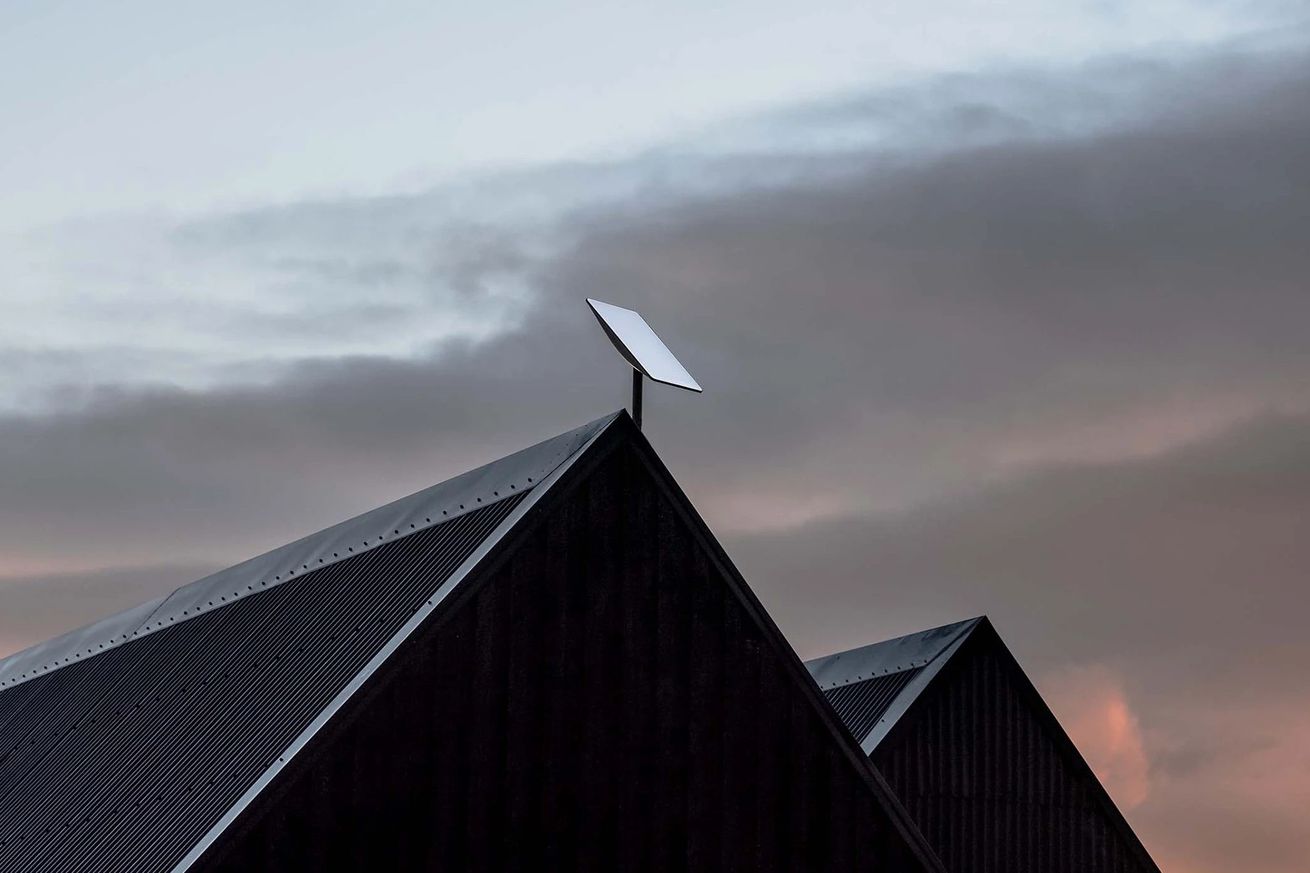
A Starlink Dishy McFlatface satellite dish on a rooftop.
A Dishy McFlatface satellite dish. | Image: Starlink

Starlink’s upcoming daytime data caps will be going into effect in February instead of December, according to revised language on the company’s website (via CNET). When Starlink first announced the caps in November, the company had said they’d kick in sometime this month. Now, they’ll be in place a little bit later than originally planned.

The terms of the data caps otherwise seem to be the same. As part of Starlink’s new “Fair Use Policy,” customers will have a dedicated amount of “Priority Access” data every month. Any data used from peak hours, which Starlink defines as 7AM to 11PM, will be pulled from that Priority Access pool. If you go over your Priority Access allocation, you can pay for more data or fall back on “Basic Access”...

Continue reading…


More details : https://ift.tt/Kc69wtn

Climate misinformation explodes on Twitter

by Unknown  |  in The Verge - Science Posts at  11:11 AM
The Twitter logo, a bird, on the side of a building in shadow.
Twitter headquarters in San Francisco, California, on Tuesday, November 29th, 2022. | David Paul Morris/Bloomberg via Getty Images

Lies about climate change on Twitter escalated to unprecedented levels this year, according to new analyses. The unnerving rise of content that rejects widely accepted climate science — sometimes referred to as climate skepticism or climate denial — piles on top of growing concerns about misinformation and hateful content that’s proliferated since Elon Musk’s takeover of the social media platform.

There have been more tweets and retweets “using climate-sceptic terminology” in 2022 than in any other year since Twitter’s founding in 2006, according to analysis conducted for The Times by City, University of London researchers. That’s 850,000 climate-skeptic tweets or retweets this year compared to 650,000 in 2021 and 220,000 in 2020.

“...

Continue reading…


More details : https://ift.tt/pK91MFe

Friday, December 2, 2022

Why wind energy isn’t living up to its pollution-preventing potential

by Unknown  |  in The Verge - Science Posts at  12:36 PM
Wind turbines stand behind homes
Interstate 40 in Adrian, Texas. | Photo by Paul Harris / Getty Images

Wind power isn’t cleaning up as much pollution as it could, especially in communities of color and low-income neighborhoods, new research shows. The US’s wind energy boom has already led to billions of dollars of health benefits. But the majority of that hasn’t trickled into communities that have historically been burdened with the most air pollution, finds a study published today in the journal Science Advances. Fortunately, that could change if new wind energy projects are deployed more strategically.

Over the past two decades, wind energy has grown from less than half a percent of the US electricity mix in 2002 to almost 10 percent today. By 2014, increasing amounts of wind energy had measurably improved air quality, resulting in...

Continue reading…


More details : https://ift.tt/6j9Zw72

Elon Musk is Elon Musk-pilled

by Unknown  |  in The Verge - Science Posts at  4:12 AM
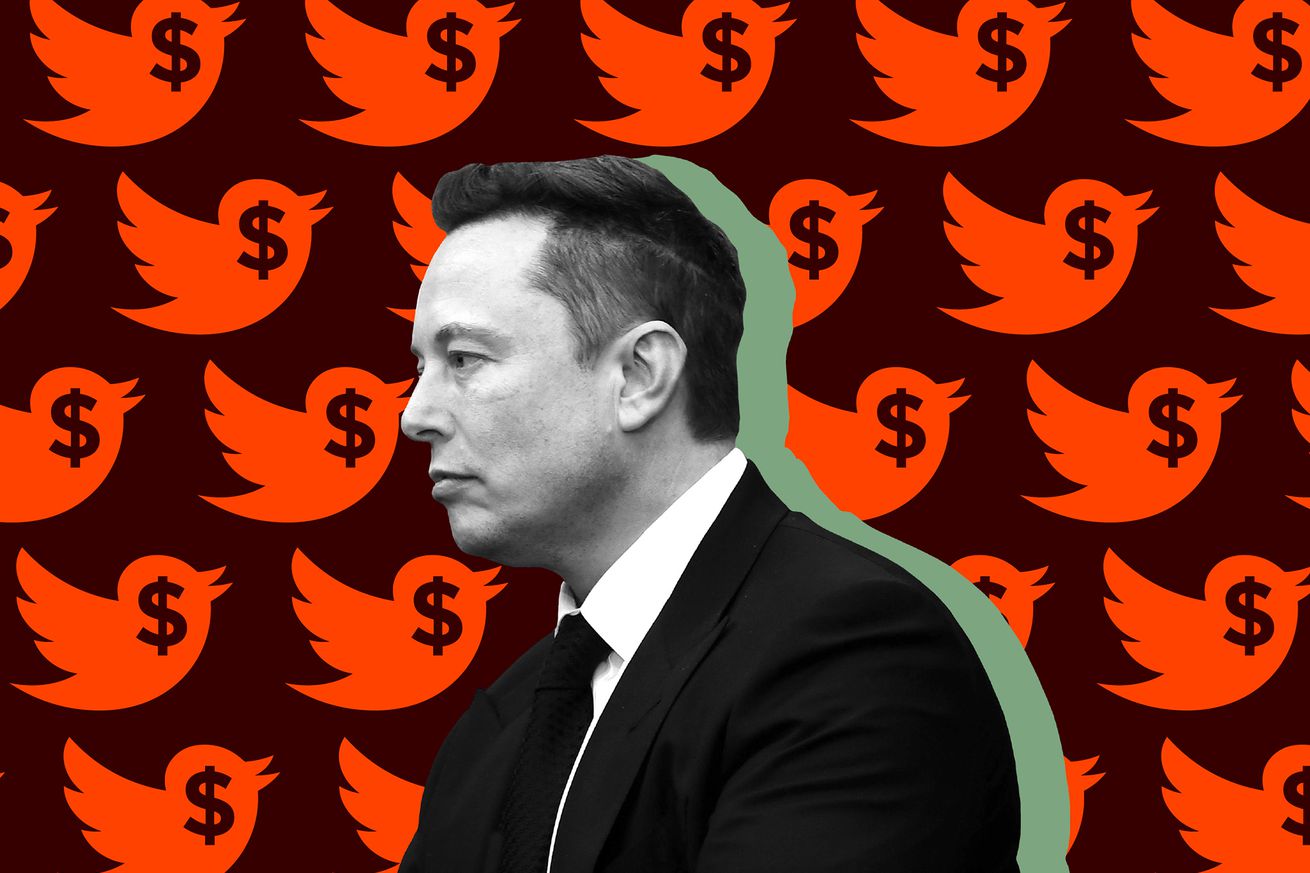
Illustration showing Elon Musk in profile, in front of Twitter logos with a dollar sign inserted in place of the bird’s eye.
[cash register noise] | Illustration by Laura Normand / The Verge

Programming note: This will be the last This Week in Elon this year. In 2023, I will return with something delightful for you that is not just about Musk shenanigans — but we will have occasional chats when there is too much Elonning going on.

Generally, I don’t think rich people believe anything besides: (1) they are basically good; (2) they deserve their money and no one should take it; and (3) anything that threatens ideas (1) and (2) is bad. Everything else is pretty flexible.

I am giving you my priors here because I am about to discuss Elon Musk and politics. I have seen some suggestions that Musk has been red-pilled,...

Continue reading…


More details : https://ift.tt/Xlr23hw

Thursday, December 1, 2022

A black hole ripped apart a star and brought together astronomers from around the world 

by Unknown  |  in The Verge - Science Posts at  10:34 AM
An illustration of an orange star being swirled apart against a stretched-out starscape. At the center of the image is a jet of pink light emanating from a dark area, a black hole.
An artist’s impression of a tidal disruption event. | Image: Carl Knox – OzGrav, ARC Centre of Excellence for Gravitational Wave Discovery, Swinburne University of Technology

It was an event not seen in more than a decade: a sudden flash of energy launched out from the center of a distant galaxy, bright enough to be visible from 8.5 billion light-years away. With a burst of light equivalent to more than 1,000 trillion suns, the flash was first detected by the Zwicky Transient Facility, a survey of the entire night sky conducted from the Palomar Observatory in California.

“On Valentine’s Day this year, we found a source that was puzzling. It was just weird!” Igor Andreoni of the University of Maryland, lead author of one of two papers about the event, told The Verge. “And weird is good in science. It means it’s something you can learn from.”

Within days, astronomers around the world turned their telescopes...

Continue reading…


More details : https://ift.tt/QovUp8N

Wednesday, November 30, 2022

Elon Musk claims Neuralink is about ‘six months’ away from first human trial

by Unknown  |  in The Verge - Science Posts at  9:11 PM
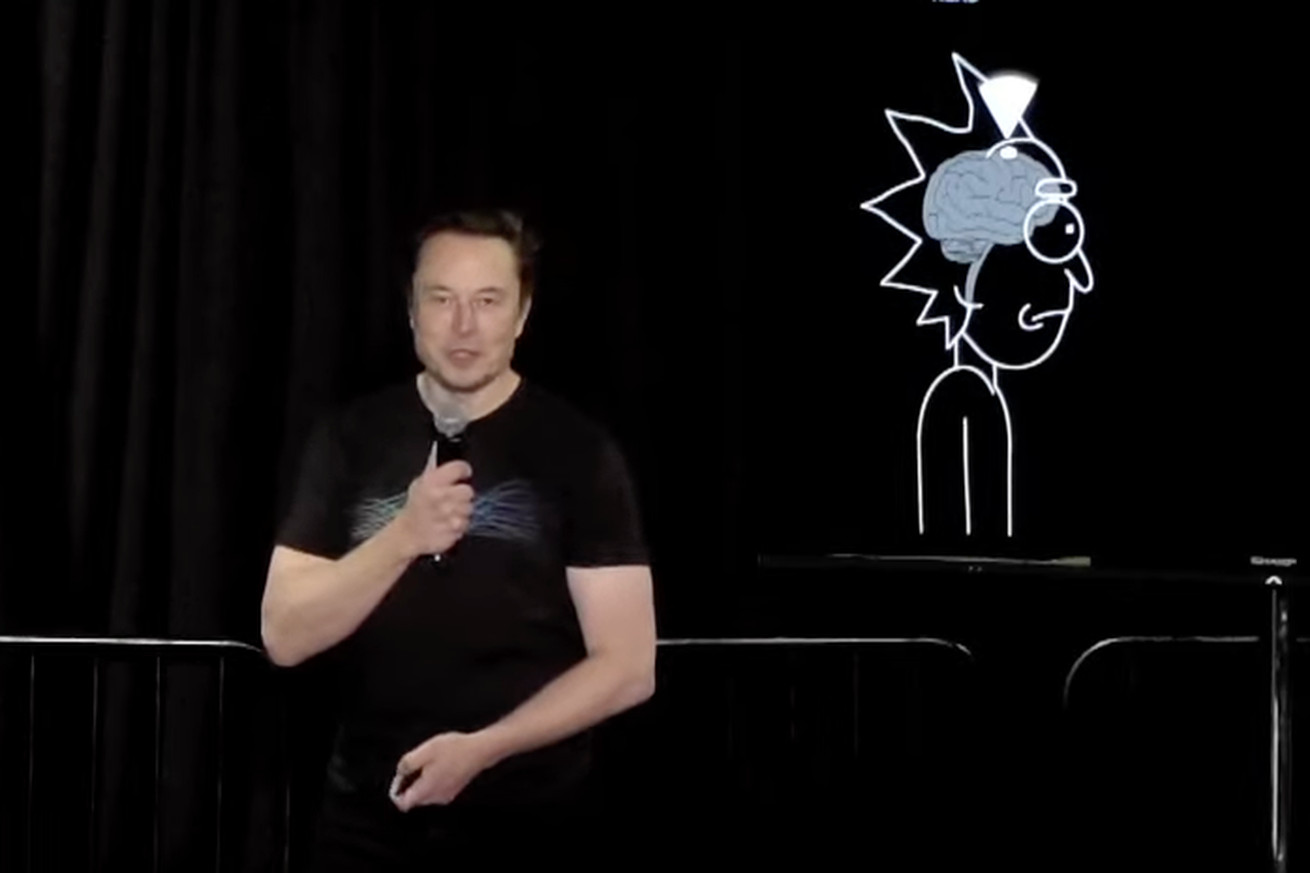
Elon Musk speaking at the Neauralink 2022 event | screenshot from Neuralink

At a ‘show and tell’ event on Wednesday, Elon Musk said that his brain-computer interface company, Neuralink, could implant one of its devices in someone’s head within the next six months — meaning it’s not happening this year. He also claimed that he would get the device implanted in his own head at some point in the future.

During the presentation, Musk said that the company had submitted most of the paperwork needed for a human clinical trial to the Food and Drug Administration, which regulates medical devices in the United States. Previously, Musk had said that he’d hoped for human trials to begin in 2020, and then 2022. Now, that’s slipped to at least 2023.

Neuralink’s goal is to create a device that can be implanted in the brain,...

Continue reading…


More details : https://ift.tt/JwgovHd

SpaceX almost doubles its current Starlink prices in Ukraine

by Unknown  |  in The Verge - Science Posts at  11:19 AM
Puppies rest next to a Starlink terminal near the recently liberated town of Lyman, Ukraine.
The price of Starlink terminals in Ukraine will increase from the equivalent of $385 to about $700. | Image: Oleksandr Ratushniak/Reuters

The price of a Starlink satellite terminal has almost doubled in Ukraine, according to a report from the Financial Times, following increased demand for the SpaceX satellite devices and targeted Russian attacks on the country’s electrical grid that have caused communications networks to fail.

Starlink terminals in Ukraine are set to increase from the equivalent of $385 to about $700. The monthly subscription required to use the service will also climb from $60 to $75 on December 29th according to emails sent to Ukrainian Starlink customers, though this is still cheaper than its original $100 rate, which was dropped back in August to “reflect local market conditions.” For the sake of comparison, a Starlink dish costs $599 in the US,...

Continue reading…


More details : https://ift.tt/ZboplsW